



A BPN Uganda leadership guide for SME managers
Pay matters – but Ugandan SMEs will rarely out-pay the big players. So if salary isn’t your weapon, what is? Here are five things you can give your team without touching the budget.
Quick Takeaways
- Recognition costs nothing and retains talent. Naming good work – personally, in the team, or with a small gesture – is one of the cheapest retention tools an SME leader has.
- Employees don’t need a seat on the board – they need to be heard. In a small company, genuinely listening is your unfair advantage over big employers.
- Giving people a visible growth path builds loyalty even without more hierarchy levels – clarity alone is motivating.
- Development doesn’t require a training budget – stretch assignments, internal mentoring, and shared resources build skills at no cost.
- Connecting daily work to a larger purpose is short and direct in an SME – leaders just have to draw the line.
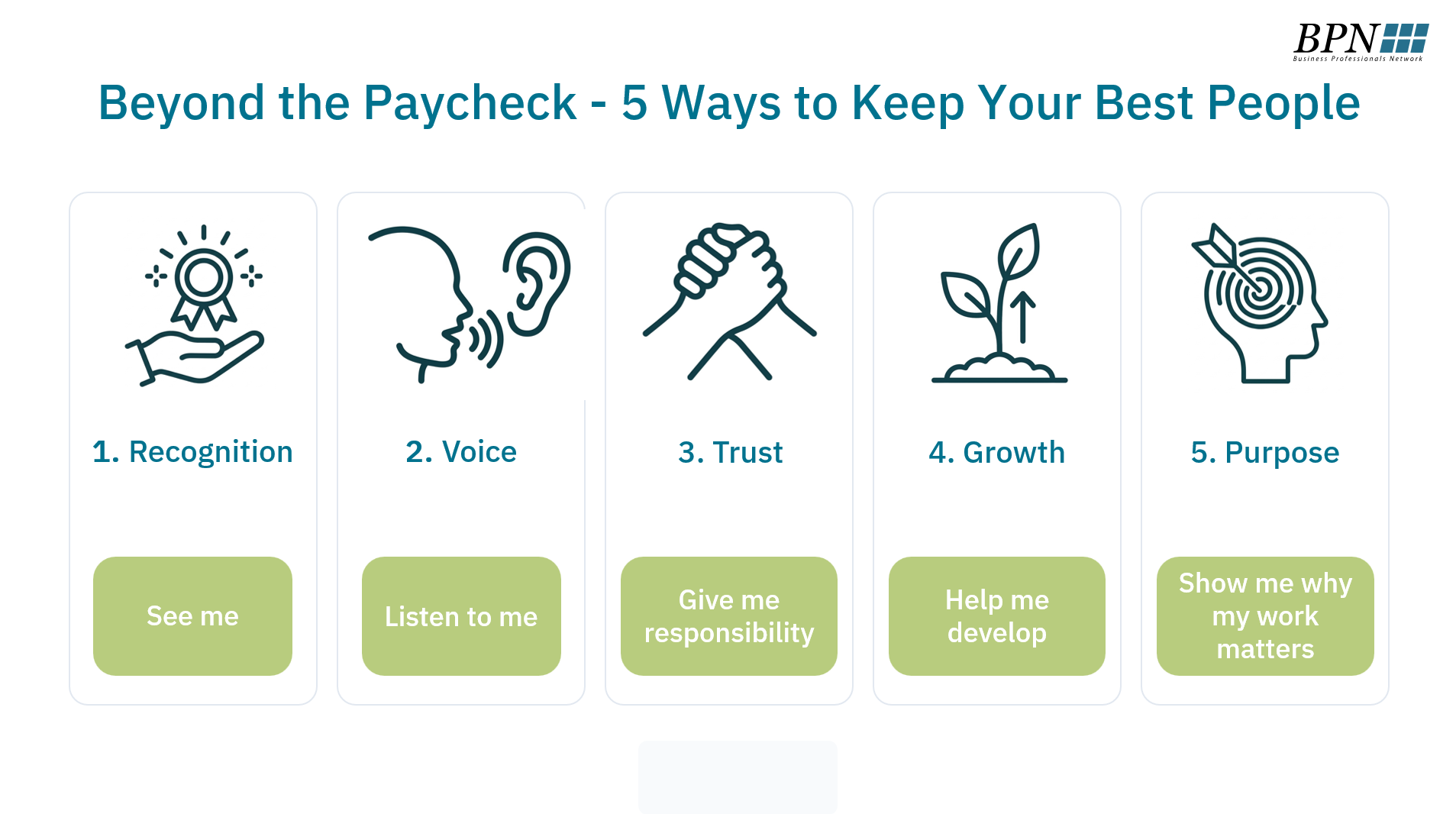
1. Recognition – See Me
Name good work when it happens. Personally, in the team, or with a small gesture. A thank you isn’t expensive, but it’s priceless.
2. Voice – Listen to Me
Employees don’t need a seat on the board. They need to know someone’s listening. In a small company, this is your unfair advantage. You don’t need a suggestion box or an annual engagement survey – you can just ask.
- Before you finalize a decision that touches their daily work, ask them first – not after.
- Take problems seriously, even the small ones, especially the small ones – and follow through. If you ask for input but nothing changes, people stop offering it.
- See your employees as people, not just roles. Ask about their life. Remember what they tell you. People know the difference between a manager who’s managing and one who actually cares.
3. Trust – Give Me Responsibility
Let people see a path: “If I stay two years and do good work – what happens?”
Fewer hierarchy levels doesn’t mean less room to grow. And clarity, on its own, is motivating.
4. Growth – Help Me Develop
Development doesn’t require an expensive training budget. It requires intention.
- Give people tasks slightly above their role: leading a project, presenting to a client, owning a new process. Growth happens on the job, not just in classrooms.
- Pair junior employees with someone more experienced internally – no cost, just structure.
- Share targeted links, articles, or videos with learning value – it costs nothing, but shows: I’m thinking about your development.
5. Purpose – Show Me Why My Work Matters
Connect their work to the customer, the company, the community. In an SME, that line is short – draw it.
So ask yourself: if you can’t give your best people a raise this year, what could you give them that makes them stay anyway?
Want more hands-on leadership tools like these? Join the BPN Leadership Seminar