



What a motivating work environment looks like is perceived differently by every employee. Each employee has their own strengths and weaknesses, and they are most motivated when they can make optimal use of their strengths. For a manager, this means knowing very precisely how their employees tick, what drives them, and how they can be motivated.
A personality profile can help shed light on this matter. Many personality profiles work with four basic behavioral styles, derived from the opposing poles of extroverted and introverted, as well as task-oriented and people-oriented.
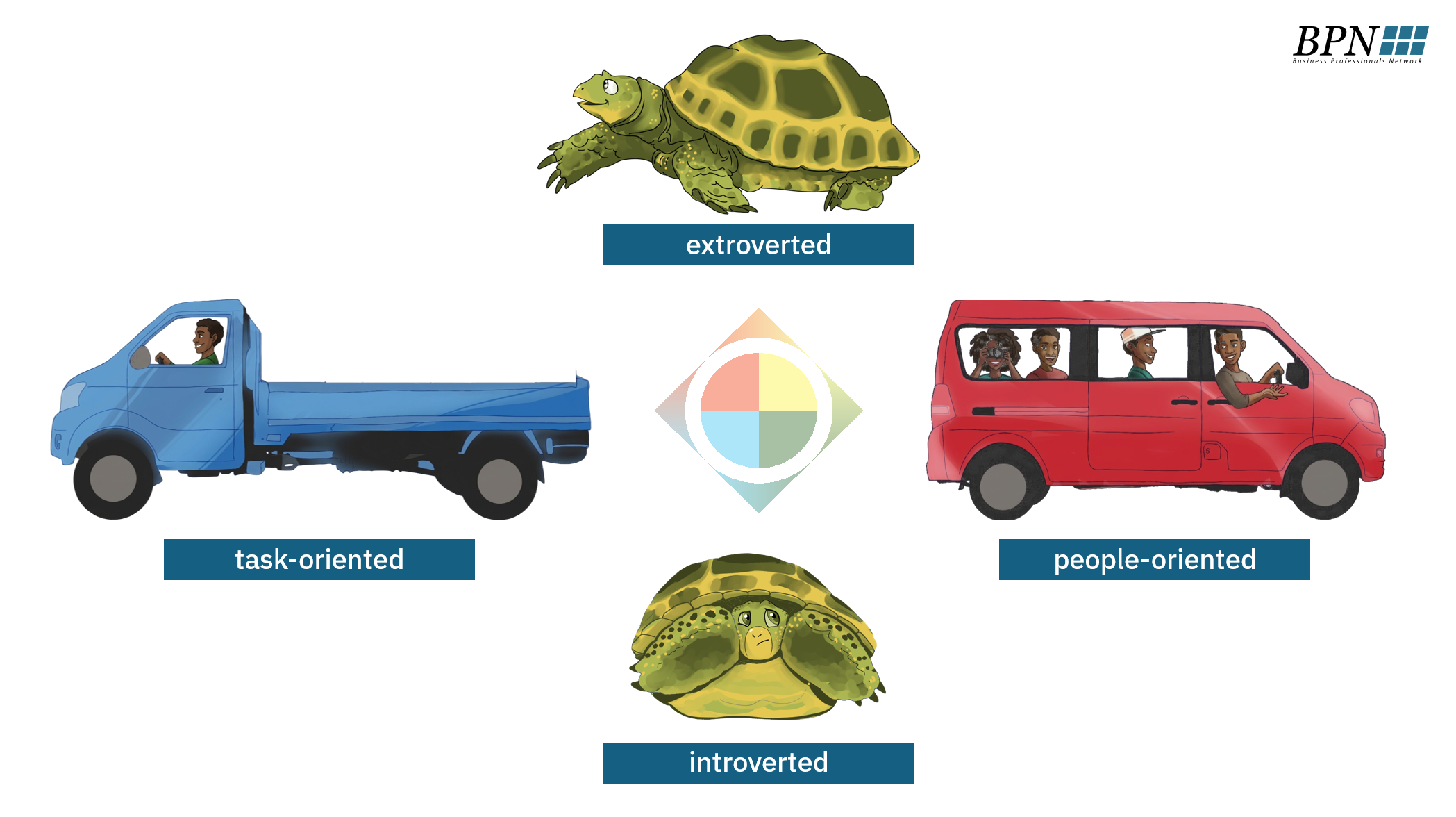
In group settings, introverted employees tend to stay in the background. They are perceived as reserved and withdrawn and prefer quieter activities, either alone or in small groups. Extroverted employees, on the other hand, are seen as sociable and outgoing, and strive to be the center of attention.
Task-oriented employees work solution-oriented. For them, numbers, data, and facts count above all. People-oriented employees are guided by intuition; they place relationships and the needs of others at the center and often act impulsively.
On this basis, four basic personality types emerge, each represented by an animal embodying its typical traits.
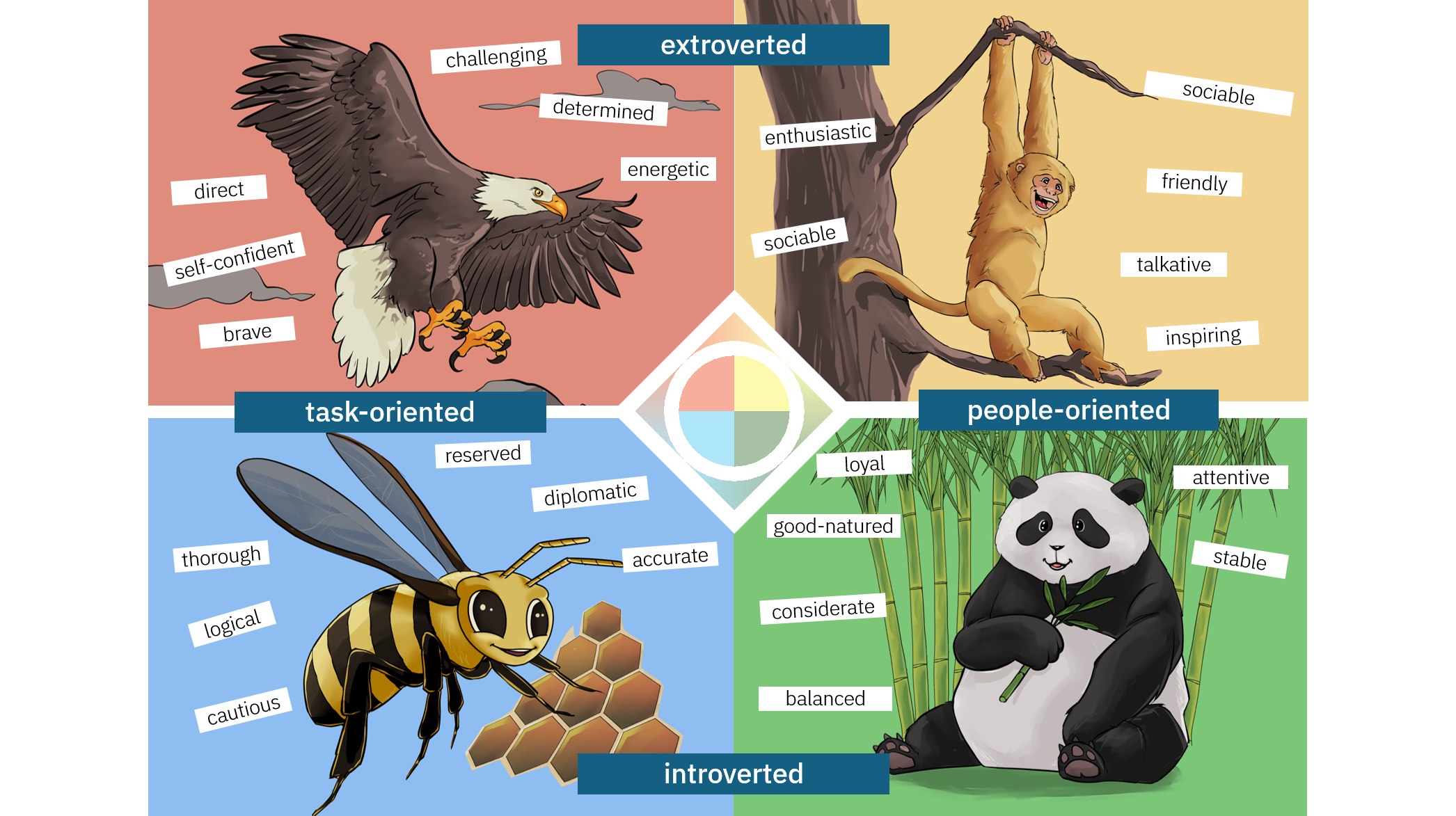
Eagle: extroverted and task-oriented behaviour
Monkey: extroverted and people-oriented behaviour
Panda: introverted and people-oriented behaviour
Bee: introverted and task-oriented behaviour
These types rarely exist in pure form. Everyone has a bit of all four within them, just in different proportions. Which is why different employees respond to different motivators.
Eagles thrive on ambitious goals. They like to be in the spotlight and want to control their environment. As a manager, you can motivate these employees by offering a varied, challenging work environment with tasks that carry real responsibility. Eagles love competition and make quick decisions. A workplace full of rigid rules and procedures will quickly demotivate them.
Monkies enjoy working in a team with others. They’re motivated by work that gives them opportunities to build relationships with others. They are open, optimistic, and enjoy expressing their thoughts and feelings in words. Group activities are a favorite. They expect their boss to acknowledge their work immediately with verbal feedback like “Great! Well done!” Fixed deadlines, tight schedules, and routine tasks feel restrictive and demotivating to them – as does work that requires great attention to detail.
Pandas prefer a work environment where they can collaborate constructively with others and know exactly what is expected of them. Support from their supervisor and colleagues matters a great deal to them. Major changes tend to make them uneasy, so they seek out a stable, harmonious atmosphere. What motivates them above all is strong encouragement and recognition for their loyalty and the work they’ve done. They’re more comfortable in the role of team member than team leader, striving to create a predictable, organized environment. What truly sets them apart is their remarkable ability to listen to others.
Bees strive for perfection. They like to work systematically, plan ahead, and analyze situations carefully. As a manager, you can motivate them by recognizing and rewarding the quality and precision of their work. They find it demotivating when they have too little information to make decisions, or too little time to deliver high-quality work. Besides their thirst for knowledge and quality awareness, they stand out for their diplomatic communication style. On the other hand, they have difficulty lowering their standards for themselves and others.
Do you know your employees’ language of motivation, and are you offering them the right incentives? Would you like to get to know yourself and your employees better with the help of a personality profile?
Create your individual personality profile using the tool at the following link: