

Author: Daniel Matter, Country Director, BPN Uganda
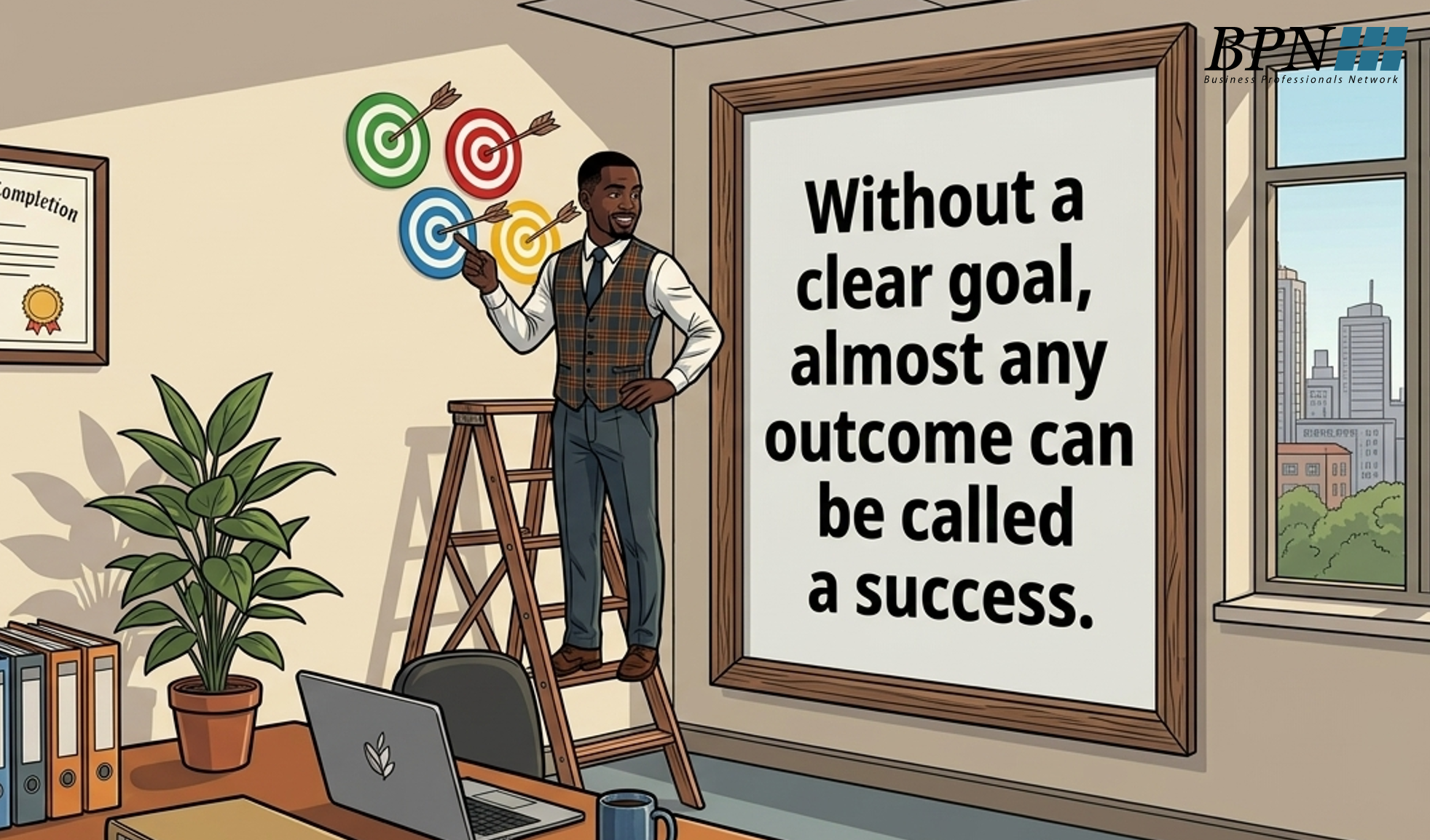
Without a clearly defined goal, any outcome can be sold as a success. Clear, written, measurable goals are what separate a busy year from a successful one.
Quick Takeaways
- Without a defined goal, any result can be called a success. That is how a year ends in a shrug instead of an answer.
- Owners avoid goals for two reasons: they are too busy to ask where the business is heading, or they fear falling short.
- Small businesses can’t afford vague goals. Money flows to the loudest customer and the most urgent fire when nothing says what matters most.
- A clear goal is a filter. It tells you what to say yes to, and what to say no to.
- A SMART goal is written down, measurable, and has a deadline. Review it often, not once a year.
The Archer Who Paints the Target Afterwards
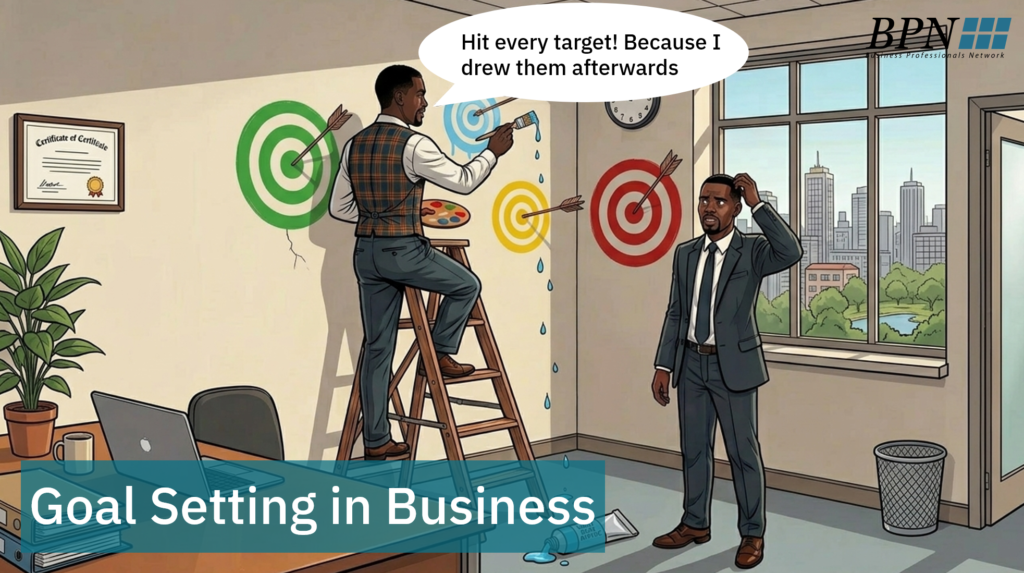
Picture an archer who shoots first and paints the target afterwards. He never misses. Every arrow hits the bullseye, because the target is drawn around wherever the arrow lands.
It sounds absurd. Yet this is exactly how many businesses operate throughout the year.
Why Business Owners Struggle to Set Goals
In our business coaching sessions with entrepreneurs, we see the same challenge time and again: many owners find it difficult to set clear goals for their businesses. Two reasons stand out.
- Some don’t know what they want to achieve. They are so caught up in the day-to-day demands of running the business that they never stop to ask where they’re heading in the long run.
- Others know, but fear falling short. A goal you never write down is a goal you can never miss. So it stays in their head, safe and vague.
Whichever road you take, December comes. And with it the question: “Did this year deliver what you wanted?”
The answer is rarely yes or no. It’s a shrug, a pause, or a long list of things that kept them busy. But busy is not the same as successful.
Why Small Businesses Can’t Afford Vague Goals
Small businesses share one reality: people are scarce, and money is scarcer. Every shilling and every working hour has to count.
Without clear operational and financial goals, energy scatters. Money flows to the next good idea, the loudest customer, the most urgent fire. Not because owners are careless, but because nothing tells them what matters most.
A clear goal works like a filter. It tells you what to say yes to. More importantly, it tells you what to say no to.
Vague Wish vs. SMART Goal: Examples for Small Businesses
A SMART goal is written down, measurable, and has a deadline. (SMART stands for Specific, Measurable, Achievable, Relevant, Time-bound.) The difference is easy to see when you put them side by side.
|
Vague wish |
SMART goal |
|
Grow the business this year. |
I will grow my average monthly sales by 30%, from UGX 12,000,000 to UGX 15,600,000, by 31 December 2027 |
|
Cut costs. |
I will cut my monthly raw-material waste by 15%, from 200 kg (last year’s monthly average) to 170 kg, by 30 June 2027. |
|
Get more customers. |
I will turn 20 first-time buyers into repeat customers by 30 June 2027 and track my progress every month. |
And at year-end, the big question finally gets an answer. Sometimes an uncomfortable one. But an honest answer is where real growth starts.
Paint the Target First: BPN’s Operational Business Planning Workshop
That’s exactly what the BPN Operational Business Planning Workshop is for. Together, we help entrepreneurs put clear operational and financial goals in writing.
And those goals don’t vanish into a drawer. In follow-up coaching, we revisit them again and again: Where are you now? What’s working? What needs to change?
Define your business goals with us.
Register today for the BPN Operational Business Planning Workshop.