


Let’s be honest.
Consumers are naturally skeptical of advertising. They see dozens — sometimes hundreds — of messages every day and most of them blend into noise. Predictable slogans, polished visuals, and formulaic claims rarely break through.
But then something surprising shows up — an absurd billboard, an exaggerated claim, a ridiculous role reversal, or a joke that makes us smile. That’s when the brain “wakes up.”
This is the power of humour in advertising.
When Expectations Are Broken, Attention Follows
Humour works not because people like ads — most people don’t — but because it interrupts automatic processing and grabs attention.
Psychological studies show that humour enhances attention and positive affect, meaning it pulls the viewer in and creates a pleasant reaction.
When our expectations are “safely violated” — when something is unexpected but not threatening — the brain responds with increased alertness and dopamine release. Dopamine isn’t just about pleasure — it’s tied to attention, memory, and emotional engagement. That’s why humorous ads stick in our heads long after we see them.
What Happens in the Brain When We Laugh

When we encounter humour:
-
Attention increases — we pay closer attention to what just surprised us.
-
Emotional response spikes — laughter triggers positive feelings.
-
Memory gets stronger — experiences tied to emotion are better remembered.
This combination is exactly what advertisers want: attention, emotion, and memorability.
In a world where most ads are tuned out, humour helps a brand get seen and remembered.
Laughter Lowers Defenses and Builds Connection
Humour doesn’t just entertain — it relaxes the audience.
When people laugh, their psychological defenses drop. They feel lighter, more open, and more receptive to the message being delivered.
That emotional shift matters in marketing, because resistance and skepticism are common barriers to persuasion. When humour is used well, the audience doesn’t just notice the ad — they feel something positive about it.
This emotional connection can build brand affinity — people start to associate the positive experience of laughter with the brand itself.
Humour on Social Media: Why it Spreads
On social platforms, humour is one of the most viral forces in advertising.
Why?
-
People share content that makes them laugh.
-
Sharing humorous posts boosts social currency — “look what I found, it’s funny!”
-
Humour creates natural engagement loops, encouraging comments and tags.
Content that elicits a smile or laugh doesn’t just communicate a message — it invites participation. That’s why funny content often travels farther than serious or purely informational posts.
But Not All Humour is Created Equal
It’s important to note: humour is not a magic wand.
Research confirms that humour can improve outcomes like attention and positive affect, but its effectiveness depends on execution, audience fit, and context.
Poorly targeted humour can fall flat if:
-
The joke is confusing or irrelevant
-
It distracts from the message
-
It misses cultural cues or audience expectations
Used without understanding the audience, humour can even detract from the brand’s message. The key is not just being funny — it’s being strategically funny.
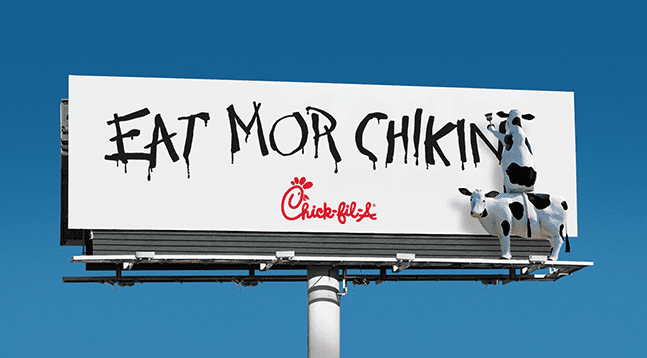
A Classic Example: “Eat Mor Chikin”

One of the most famous examples of humour in advertising comes from the “Eat Mor Chikin” campaign by Chick-fil-A.
Rather than polished ads extolling the virtues of chicken, the campaign featured Holstein cows holding hand-painted signs with the intentionally misspelled message “Eat Mor Chikin.” The cows — the very animals at risk of being eaten — urged consumers to choose chicken instead. The absurdity of cows campaigning for people to eat chicken broke expectations and made people laugh.
The result? A memorable, talk-worthy campaign that helped Chick-fil-A grow brand awareness against much bigger competitors.
The humour worked because it was:
✔ Unexpected
✔ Simple
✔ Human
✔ Memorable
And it reinforced the brand’s core message without shouting noise into the market.
A Final Thought: Laughter Is a Tool, Not a Trick
Humour isn’t a guaranteed shortcut to success — but when used thoughtfully, it can be one of the most powerful tools in a marketer’s toolbox.
It increases attention, creates positive emotional associations, boosts memorability, and spreads on social platforms. It’s not just entertainment — it’s strategic communication.
In a crowded marketplace, where audiences have developed advertising resistance, humour cuts through the noise and builds a genuine connection.
So the next time you craft a message, don’t ask whether you can be funny — ask whether a well-placed bit of humour might make your message stick.